Air Conditioning Installation in Rancho Cordova, CA
When your air conditioner runs all afternoon but the house still feels warm, replacing it can seem like the obvious answer. Yet the equipment itself is only part of the decision. System size, duct condition, airflow, insulation, electrical capacity, and installation quality all affect whether a new air conditioner will keep your home comfortable through a Rancho Cordova summer.
Sierra Valley Mechanical helps homeowners compare their options without sales pressure. Our technicians are paid hourly rather than by commission, so the recommendation starts with what your home and existing system actually need.
Call or text (916) 635-3120 to discuss air conditioning installation or request an estimate.
Does My Air Conditioner Need to Be Replaced?
Age alone does not determine whether an air conditioner should be replaced. A repair may still make sense when the system has been dependable, the problem is isolated, replacement parts are available, and the indoor and outdoor components remain compatible.
Replacement deserves a closer look when several problems begin happening together:
- The system runs for long periods without reaching the thermostat setting.
- Some rooms remain noticeably warmer than others.
- Repair calls are becoming more frequent or expensive.
- The evaporator coil or outdoor condenser has a significant refrigerant leak.
- The compressor is failing.
- Cooling costs have increased without a similar change in weather or thermostat use.
- The system uses an older refrigerant that makes future repairs more complicated.
- The equipment is poorly matched, incorrectly sized, or unable to provide adequate airflow.
A weak capacitor, dirty coil, thermostat problem, restricted filter, or minor electrical fault does not automatically justify replacement. Sierra Valley can inspect the system and explain whether air conditioning repair in Rancho Cordova remains the more practical choice.
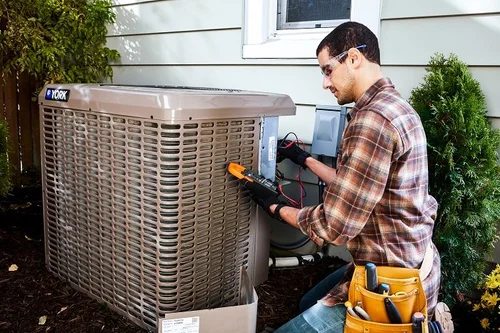
What Should Be Checked Before Choosing a New System?
A replacement estimate should account for more than the model number on the old condenser. Installing another unit of the same nominal size can repeat an earlier sizing mistake or overlook changes made to the house.
How Much Cooling Does the Home Actually Need?
Square footage is only one part of equipment sizing. Window area, sun exposure, ceiling height, insulation, air leakage, occupancy, and the direction the home faces all influence the cooling load. An oversized system may cool quickly but cycle too often, while an undersized system can run continuously during peak heat.
Can the Existing Ductwork Carry the Required Airflow?
The new system cannot deliver comfort if the ductwork restricts or loses too much air. Return-air capacity, duct leakage, crushed flex duct, undersized branches, and excessive static pressure can leave distant rooms warm and place unnecessary strain on the blower motor and compressor.
Airflow concerns should be identified before installation, not after the new equipment is operating. Some homes need only targeted duct corrections or balancing. Others may need more substantial changes to receive the full benefit of new equipment.
Are the Indoor and Outdoor Components Compatible?
The outdoor condenser, indoor evaporator coil, blower, furnace or air handler, thermostat, and metering device work as one system. Mixing components without confirming their rated match can reduce efficiency, affect humidity control, create refrigerant problems, and complicate warranty coverage.
Is the Electrical System Ready?
The installation assessment should confirm the disconnect, circuit protection, wiring, and available electrical capacity. This is especially important when changing equipment types, adding variable-speed technology, or moving from gas heating to an electric heat pump.
Why Does Rancho Cordova Heat Change the Installation Decision?
Rancho Cordova’s hot, dry summers create long cooling cycles and heavy afternoon demand. Attic temperatures can rise far above the outdoor temperature, increasing heat gain through ceilings and exposing attic ductwork to harsh conditions. Small duct leaks become more expensive when the system is sending conditioned air into a hot attic instead of the living space.
Homes across established areas near Coloma Road and newer communities toward Anatolia do not necessarily have the same comfort problems. Older homes may have limited return air, aging ducts, or insulation that has settled over time. Newer, tightly built homes can have different ventilation, zoning, and room-by-room load requirements. These conditions should shape the design rather than being treated as an afterthought.
Wildfire smoke and seasonal dust also make filtration and indoor-air planning relevant. A restrictive filter added without checking static pressure can reduce airflow. The better approach is to select filtration that protects indoor air while remaining compatible with the blower and duct system.
Should I Install a Central Air Conditioner or a Heat Pump?
A central air conditioner provides cooling and typically works with a furnace for heating. A heat pump can cool the home in summer and reverse operation to provide electric heating in winter. Both can be appropriate in Rancho Cordova; the better choice depends on the existing equipment, energy goals, electrical capacity, comfort preferences, and total project cost.
Homeowners considering electrification may want to compare a high-efficiency heat pump with a conventional air conditioner and furnace combination. Sierra Valley also provides heat pump installation in Rancho Cordova.
SMUD currently lists incentives for qualifying two-stage and variable-stage heat-pump systems installed through eligible contractors. Program rules and funding can change, so eligibility should be confirmed before equipment is selected or savings are included in a budget. Review the current requirements on [SMUD’s heating and cooling rebate page](https://www.smud.org/HVAC).
Which Efficiency Features Are Worth Considering?
SEER2 measures seasonal cooling efficiency under updated testing conditions. A higher rating can reduce electricity use, but efficiency should be considered alongside system size, duct performance, installation quality, repairability, and the way the home is used.
Equipment options may include:
- Single-stage systems: Operate at full output whenever cooling is needed.
- Two-stage systems: Can run at a lower output during moderate conditions and increase capacity when demand rises.
- Variable-speed or inverter systems: Adjust output across a wider range for longer, steadier cycles and more precise comfort.
- Smart or communicating controls: Can provide scheduling, system monitoring, and advanced equipment coordination when compatible.
The most expensive system is not automatically the right one. A properly selected midrange system with sound ductwork can outperform premium equipment attached to a restrictive or leaky air-distribution system.
What Determines the Cost of Air Conditioning Installation?
A responsible estimate requires an on-site assessment because the equipment is only one part of the project. Cost can be affected by:
- Required cooling capacity and efficiency level
- Single-stage, two-stage, or variable-speed operation
- Condition and compatibility of the furnace, air handler, and evaporator coil
- Duct repairs, sealing, balancing, or replacement
- Electrical changes
- Refrigerant line condition or replacement
- Equipment location and attic access
- Condensate drainage and equipment-pad work
- Permits and inspections
- Thermostat or zoning changes
Sierra Valley offers financing for qualified customers. Available terms, rebates, and promotions should be verified when the estimate is prepared because programs change.
What Happens During the Installation Process?
- Home and system assessment: The technician reviews the existing equipment, comfort concerns, airflow, ductwork, electrical requirements, and the home’s cooling load.
- Option comparison: You receive equipment choices based on efficiency, comfort, compatibility, and budget rather than a one-size-fits-all recommendation.
- Project preparation: The installation scope identifies required components, access needs, duct or electrical work, and applicable permitting.
- Removal and installation: The old equipment is removed and the new indoor and outdoor components are installed, connected, evacuated, and prepared for operation.
- Startup and testing: Refrigerant operation, temperature change, airflow, static pressure, drainage, electrical performance, and thermostat control are checked.
- Homeowner walkthrough: The team explains system operation, filter requirements, thermostat use, maintenance, and warranty-related responsibilities.
Installation time depends on the scope. A straightforward replacement may be completed more quickly than a project requiring ductwork, electrical changes, zoning, equipment relocation, or other corrections. The expected schedule should be established before work begins.
How Can I Protect the New System?
Correct installation provides the foundation, but maintenance helps preserve it. Filters need to be replaced or cleaned at an interval appropriate for the home, filter type, pets, dust, and system use. Outdoor equipment should remain clear of vegetation and debris, while coils, electrical components, drainage, airflow, and refrigerant performance should be checked periodically.
Sierra Valley offers HVAC maintenance and comfort-plan options for homeowners who want scheduled system care.
Why Work With Sierra Valley Mechanical?
Sierra Valley Mechanical has served the region since 2002. The family business works with residential and commercial systems, and its NATE-certified technicians are paid hourly rather than by commission. That compensation structure matters when you are deciding whether to repair an existing air conditioner or invest in replacement: the technician does not benefit from turning a repair visit into an equipment sale.
Sierra Valley is also a York Certified Comfort Expert and installs York equipment. Brand matters, but the company’s approach remains focused on system design, compatibility, airflow, and the work your property actually needs.
Homeowners comparing other comfort improvements can explore Sierra Valley’s complete heating and air conditioning services in Rancho Cordova.
Ready to Compare Your Air Conditioning Options?
You should not have to decide between repair and replacement without understanding the condition of your current system. Sierra Valley Mechanical can inspect the equipment, discuss the comfort problems you have noticed, and explain the practical options for your home.
Call or text (916) 635-3120 to request an appointment for air conditioning installation in Rancho Cordova.
What Else Do Rancho Cordova Homeowners Ask?
How do I know whether to repair or replace my air conditioner?
Consider the system’s condition, repair history, efficiency, refrigerant type, comfort performance, and the cost of the proposed repair. An isolated problem may justify repair, while repeated failures, a major coil or compressor problem, poor system matching, or persistent comfort issues can make replacement more practical.
Why is proper air-conditioner sizing important?
An oversized system may cool quickly, cycle frequently, and create uneven comfort. An undersized system may run continuously during hot weather. Proper sizing considers insulation, windows, air leakage, sun exposure, occupancy, ductwork, and local design temperatures—not square footage alone.
Do I need to replace my furnace when I replace the air conditioner?
Not always. The furnace or air handler may remain if its blower, controls, physical configuration, and efficiency are compatible with the new cooling system. Replacing both may make sense when the indoor equipment is aging, incompatible, inefficient, or likely to require near-term replacement.
Can existing ducts be used with a new air conditioner?
Often they can, but they should be inspected first. Leakage, restricted returns, damaged flex duct, poor insulation, or undersized branches can limit the performance of new equipment. Corrections should be based on measured airflow and static pressure rather than assumptions.
Would a heat pump be better than a standard air conditioner?
A heat pump provides both cooling and electric heating, while a standard air conditioner provides cooling and usually works with a furnace. The right choice depends on existing equipment, utility incentives, electrical capacity, efficiency goals, and the total installed cost.
How long does air conditioning installation take?
A straightforward replacement may be completed in a day, but projects involving duct changes, electrical work, equipment relocation, zoning, or difficult access can take longer. The contractor should explain the expected scope and schedule before installation begins.
Are financing and rebates available?
Sierra Valley Mechanical offers financing for qualified customers. SMUD may also offer incentives for qualifying heat-pump systems. Financing terms, equipment eligibility, rebate funding, and program requirements should be confirmed when the estimate is prepared.